In the Footsteps of Vipava Valley Women: Stories Connecting Heritage, Regenerative Tourism and the Local Community
The presentation of the results of the Untold Stories: In the Footsteps of Vipava Valley Women project at the Ajdovščina Tourist Information Centre (TIC Ajdovščina) marks the successful conclusion of a one-year initiative. Through research, storytelling and the development of new tourism experiences, the project has shed light on the important yet often overlooked role of women in the history of the Vipava Valley.
The project was based on collecting personal testimonies, researching archival sources and working closely with local residents. At its heart are the stories of women who once travelled on foot along routes connecting the Vipava Valley with Gorizia, Trieste and Idrija. By selling home-grown produce, they made an important contribution to supporting their families and developing the local economy.
One of the project’s key outcomes is a new online platform, www.vipavskezenske.si, bringing together stories, personal testimonies, profiles of local female producers and information about newly developed themed routes. The website serves as a lasting digital archive of the stories of Vipava Valley women, allowing visitors to independently explore their heritage.
Another important project outcome is a short documentary film featuring four local storytellers who share valuable memories of the lives, work and everyday journeys of women from the Vipava Valley. The film helps preserve intangible cultural heritage and ensures that these stories remain accessible to future generations.
Based on the collected testimonies, three themed hiking and cycling routes have been developed, connecting Ajdovščina, Gorizia, Trieste and Idrija. Equipped with GPX tracks, the routes allow visitors to actively explore the region through the stories of women, its cultural heritage and local gastronomy. Although the routes do not precisely follow the historical paths once travelled by these women, they have been adapted to suit today’s visitors and include stops at local producers and points of interest along the way.
“This is a story about women who earned their place in society through their work. At a time when they had few opportunities to make decisions, their perseverance, resourcefulness and hard work created value for their families and communities. Their journeys were not merely trading routes, but also early pathways towards women’s economic empowerment. By selling home-grown produce, they generated income, made their own decisions and established connections beyond their immediate surroundings. Today, their stories are important not only as part of our heritage, but also as a reminder that women were shaping the development of our society long before our time, even though their contributions often went unrecognised,” says Elena Peljhan.
A particular strength of the project lies in the active involvement of the local community. Residents, experts, cultural institutions and local female entrepreneurs all contributed to the research and development of the project content. Today, the project brings together female winemakers, olive oil producers, beekeepers, local food producers, tourism providers and farms, all contributing to a new story of the Vipava Valley.
The project is rooted in a regenerative approach to tourism, which does not simply exploit a destination but strengthens its values, preserves local identity and creates benefits for the community. By connecting tourism and agriculture, it promotes short supply chains, local self-sufficiency and greater visibility for women’s entrepreneurship and rural development.
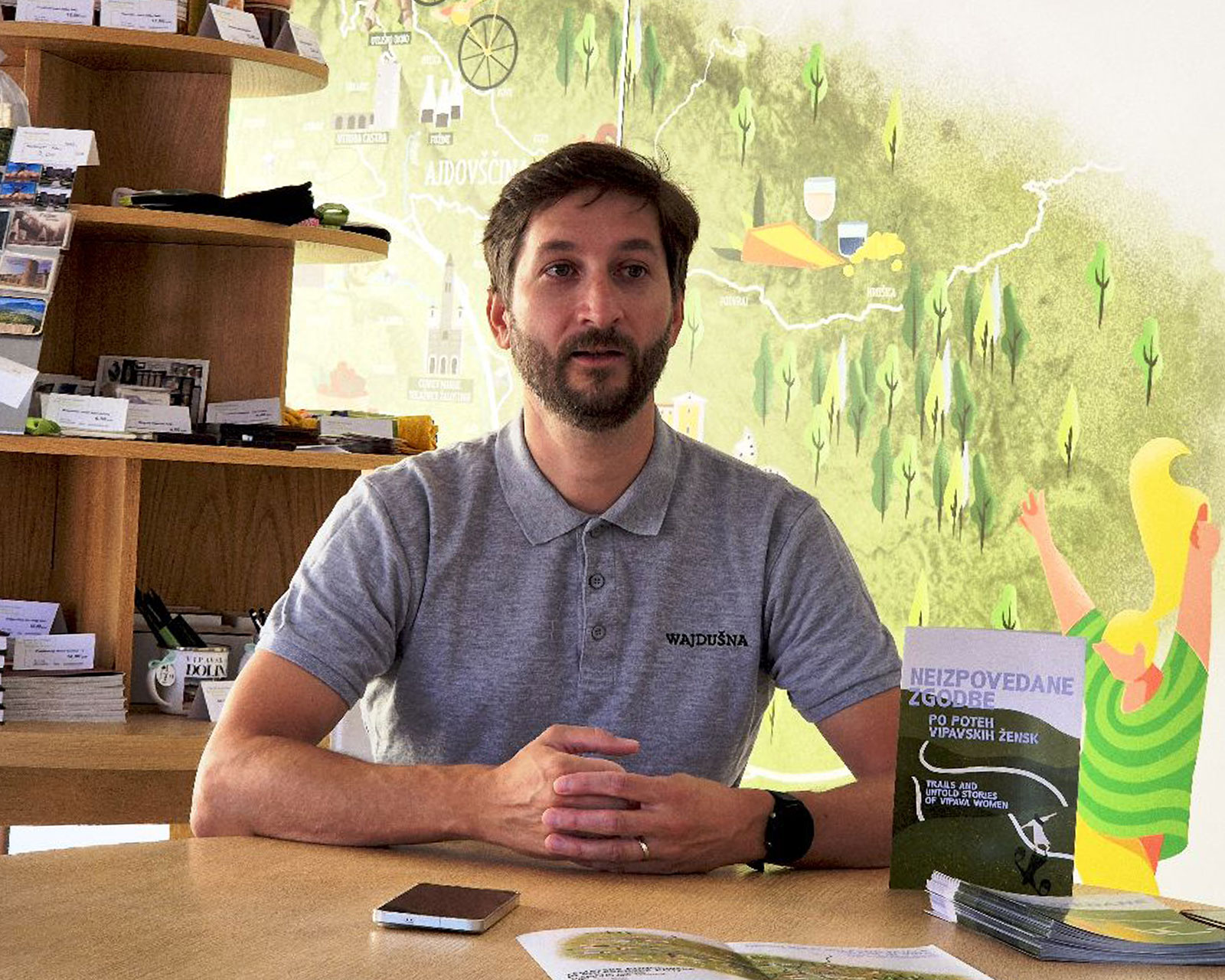
“Rather than creating new stories for tourists, we set out to discover the stories that had always been part of our community. Regenerative tourism means that a destination does not lose its identity because of tourism, but instead strengthens it through tourism. The women of the Vipava Valley inspired us to develop a tourism product that respects the local community, supports local businesses and offers visitors an authentic experience,” says Jani Peljhan of Burjatik.
Untold Stories: In the Footsteps of Vipava Valley Women demonstrates how heritage can become a source of inspiration for modern, sustainable and digitally supported tourism products. The project does more than preserve stories from the past: it creates new opportunities for the local community while offering visitors an authentic and meaningful way to experience the Vipava Valley.
The project was selected and funded through the SMARTIES for SMEs programme, which brings together eight partners from six European countries: Italy, Greece, Croatia, Slovenia, Portugal and Cyprus. The Slovenian partner is the Maribor Chamber of Craft and Small Business (Obrtna zbornica Maribor).
For further information:
Jani Peljhan
Burjatik d.o.o.
Župančičeva ulica 1c
5270 Ajdovščina, Slovenia
E: wajdusna@wajdusna.com
T: +386 41 232 548